
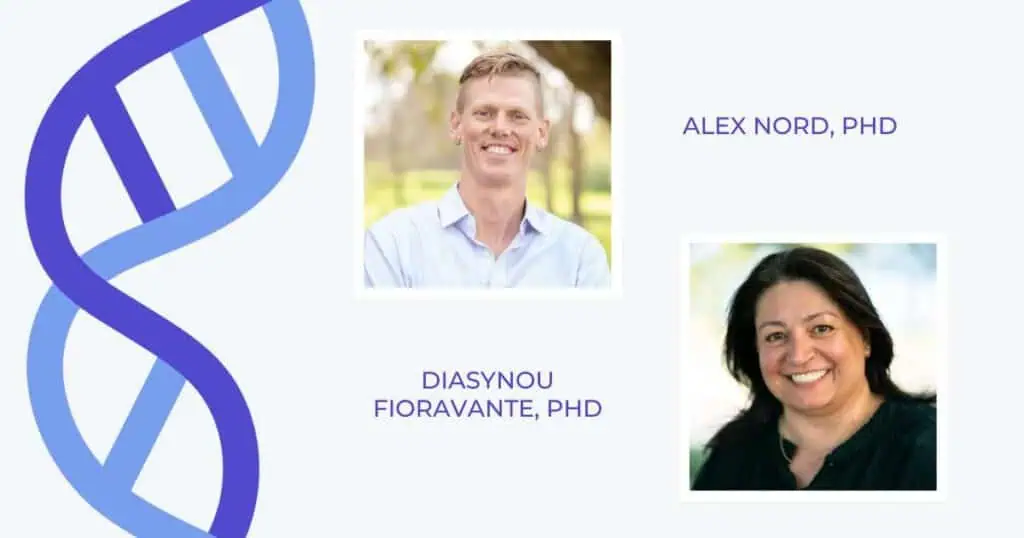
Alex Nord, PhD- University of California Davis
Diasynou Fioravante, PhD- University of California Davis
Cell-type resolved molecular and functional pathology in Scn1a mutant mouse cerebellum
Research Grant- $249,960 over 2 years
Summary from the Investigators:
Dravet syndrome (DS), caused by loss of function mutations to the SCN1A gene, is characterized by refractory epilepsy accompanied by cognitive, social, and communication deficits. Research on DS pathology and efforts to develop new treatments have primarily focused on managing seizures, though other co-morbidities are common in DS patients and frequently reported as major caregiver concerns. One understudied area is progressive loss of balance and coordination in individuals with DS, implicating dysfunction of the cerebellum (CB). While primarily known for its role in motor control, the CB also contributes to higher-order cognitive and emotional processes and has been reported to influence seizures. The few studies to date that have investigated the CB in DS have focused on Purkinje Neurons (PNs), which are sole output neurons for the cerebellar cortex, reporting signaling dysfunction and associated motor phenotypes. However, it is likely that multiple cerebellar cell types and circuits are sensitive to Scn1a mutation and contribute to DS-relevant cerebellar pathology. Here, we propose studies to address major gaps in knowledge regarding the role of the cerebellum in DS via studies using Scn1a mutant mice, with the specific goals of: 1) determining cell-type specific cellular and molecular pathology across all cerebellar cell types via powerful single cell methods, 2) linking molecular pathology with functional impacts on PNs, DCN output, and motor outcomes, and 3) establishing new cell-type specific viral methods for rescuing Scn1a expression in the cerebellum. This work will establish a foundation for future studies of the role of the CB in DS, characterizing cerebellar pathology in Scn1a mutant mice and in humans carrying SCN1A mutations and testing whether targeted cell-type specific rescue of cerebellar Scn1a expression can improve DS-relevant phenotypes, towards the ultimate goal of developing novel therapies and improved care to improve the quality of life of individuals affected by DS.
About the Investigators:
Alex Nord, Ph.D., is a Professor at the University of California, Davis, jointly appointed in the Department of Neurobiology, Physiology and Behavior in the College of Biological Sciences and the Department of Psychiatry and Behavioral Sciences in the School of Medicine. He earned a Ph.D. in Genome Sciences at the University of Washington investigating human mutations and disease under Dr. Mary-Claire King and trained as a postdoctoral fellow at Lawrence Berkeley National Laboratory with Dr. Axel Visel and Dr. Len Pennacchio.
Dr. Nord is interested in how gene expression patterns and genetic variation impact the evolution, development, and function of the brain. The Nord Lab leverages omics approaches and computational biology methods applied to mouse models and human cellular systems to address questions at the intersection of genetics, neuroscience, and developmental biology. Dr. Nord’s research has a focus on monogenic syndromes associated with complex neurodevelopmental and neurological phenotypes, including autism, intellectual disability, and epilepsy. The goal of Nord Lab is to define the underlying mechanisms of pathology and develop precision treatments towards improving the quality of life for affected individuals and their families.
Diasynou Fioravante, PhD, is an Associate Professor of Neuroscience at the University of California, Davis, jointly appointed in the Center for Neuroscience and the Department of Neurobiology, Physiology and Behavior. She earned her PhD in Neuroscience from the University of Texas Health Science Center at Houston and completed postdoctoral training at Harvard Medical School with Dr. Wade Regehr, where she developed expertise in cerebellar physiology and synaptic plasticity.
Dr. Fioravante’s lab investigates how the cerebellum supports learning, behavioral flexibility, and emotional regulation by shaping communication with the rest of the brain. Her team uses advanced molecular, physiological, and circuit-mapping approaches to understand how changes in cerebellar output contribute to neurodevelopmental and neurological disorders. With growing evidence that cerebellar circuits play a role in epilepsy and Dravet syndrome, her current work aims to identify new pathways and mechanisms that may lead to better therapeutic strategies for severe genetic epilepsies.
Her research has been supported by the National Science Foundation, National Institute of Mental Health, the NIH BRAIN Initiative, the Brain Research Foundation, the Brain & Behavior Research Foundation, the Whitehall Foundation, and the Hellman Foundation. She is also dedicated to mentorship and interdisciplinary training through leadership in the Learning, Memory, and Plasticity (LaMP) T32 program at UC Davis.