
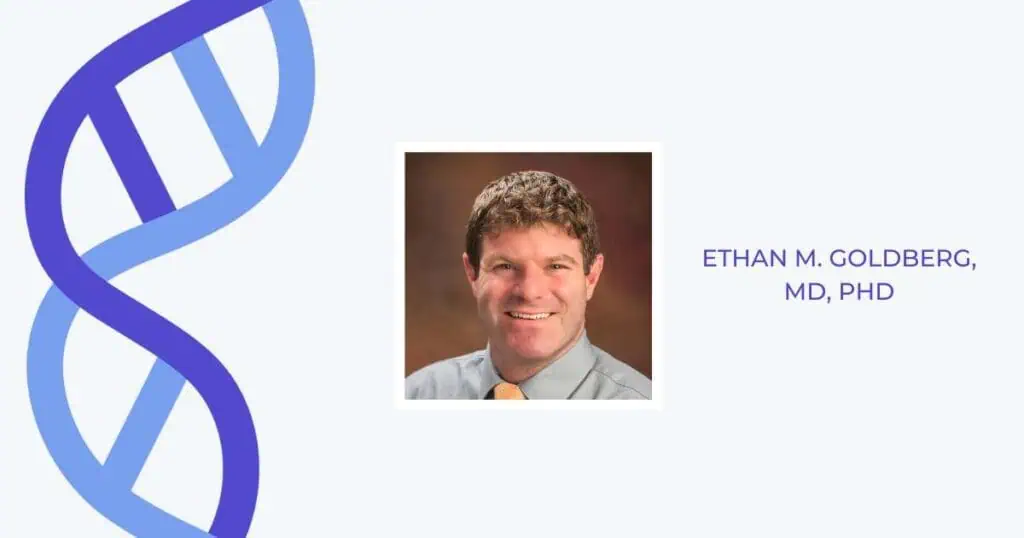
Ethan M. Goldberg, MD, PhD- The Children’s Hospital of Philadelphia
Neuromodulation for Dravet Syndrome: Preclinical Validation of a Novel Therapeutic Mechanism
Research Grant- $250,000 over 2 years
Grant Summary from the Investigator:
Children with Dravet syndrome experience epilepsy as well as comorbid psychiatric symptoms including aggression, self-injury, and mood disorder. ~ 90% of children with Dravet syndrome experience behavioral symptoms, which families often find even more distressing than seizures themselves. For many patients, medications are insufficient to control either seizures or behavioral symptoms, leaving patients and families without effective treatment options. We have recently made important insights into the mechanism of electroconvulsive therapy (ECT), a safe medical treatment already used successfully for severe depression, seizures and other brain conditions in both children and adults. ECT consists of controlled induction of a seizure under anesthesia, which has been observed to induce lasting inhibition that paradoxically protects the brain from seizures. However, for the last 90 years, it has remained a mystery how an ECT-induced seizure exerts these effects. Recently, our lab discovered that ECT triggers seizure followed by a second, hidden brain event, that resets the brain and protects against future seizures: cortical spreading depolarization. This discovery opens up exciting new possibilities for optimizing ECT and designing novel approaches to brain stimulation for severe neuropsychiatric symptoms.
We will test whether ECT can help children with Dravet syndrome by studying a mouse model of the underlying genetic mutation, with similar core features including severe epilepsy, motor dysfunction, and autism-like traits. Using light-based brain imaging techniques, we observe the brain during treatment and measure improvements in both brain activity and behavior. We will also test whether we can mimic the effects of ECT without inducing seizure, potentially leading to even better clinical outcomes. This research is uniquely positioned for immediate impact. ECT is already approved by the FDA and has been used safely in children; hence, if our research shows that ECT helps Dravet Syndrome patients, doctors could begin offering it right away. Our hospital treats over 100 children with Dravet Syndrome and is developing an ECT program to help patients with medication/resistant neuropsychiatric symptoms. Unlike developing entirely new drugs, which takes decades, this approach could provide a new therapeutic option for families and patients with Dravet Syndrome within just a few years.
About the Investigator:
Ethan Goldberg is Associate Professor in the Division of Neurology at The Children’s Hospital of Philadelphia and Departments of Neurology and Neuroscience at The University of Pennsylvania Perelman School of Medicine. He is an Attending Physician and Director of the Epilepsy NeuroGenetics Initiative (ENGIN) at CHOP where he specializes in the diagnosis and care of children with complex neurological disorders including epilepsy, developmental delay/intellectual disability, and autism spectrum disorder. His biomedical research lab studies basic mechanisms of childhood epilepsy and other neurodevelopmental disorders, with a particular interest in ion channelopathies and how genetic variation in ion channel genes leads to human disease. His lab uses a range of approaches including: human and mouse genetics; ion channel, cellular and synaptic neurophysiology; pharmacology; induced pluripotent stem cell technology and cell-based therapy; behavior; and imaging approaches including two-photon microscopy in experimental systems.
This grant was supported by Marlins for Mason